Protect the assets you bought.
The sample prioritizes flight continuity, retention of critical staff, technology access, and the certificate-holding entity. The immediate work follows from what makes this particular business valuable.
Buy-side / Post-merger integration
Put an AI analyst to work on the integration. Turn diligence findings and the investment thesis into workstream charters, an operating model, a Day 1 plan, and a workbook for milestones, synergies, risks, and earn-outs.
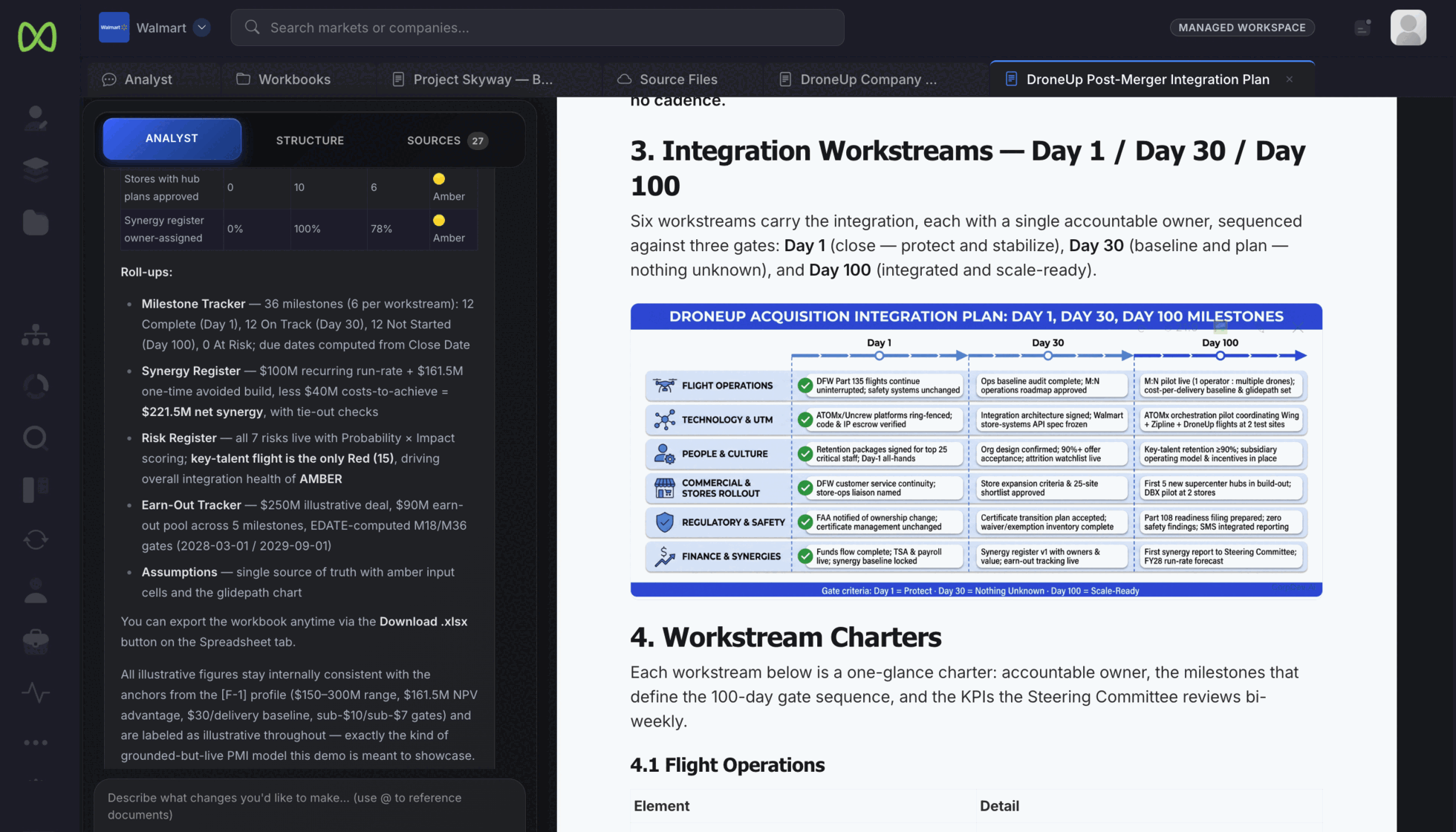
Inside the sample integration plan
This example plans an illustrative acquisition of DroneUp by Walmart. The work addresses the assets behind the thesis: flight operations, airspace technology, specialist people, store deployment, regulatory authority, and delivery economics.
The sample prioritizes flight continuity, retention of critical staff, technology access, and the certificate-holding entity. The immediate work follows from what makes this particular business valuable.
Develop the operating baseline, integration architecture, organization, and store rollout criteria. Give each workstream an accountable owner and explicit decisions to bring to governance.
The plan specifies operational pilots, technology integration, talent retention, new hub development, and the first synergy review. The tracker carries the milestones and measures into the execution period.
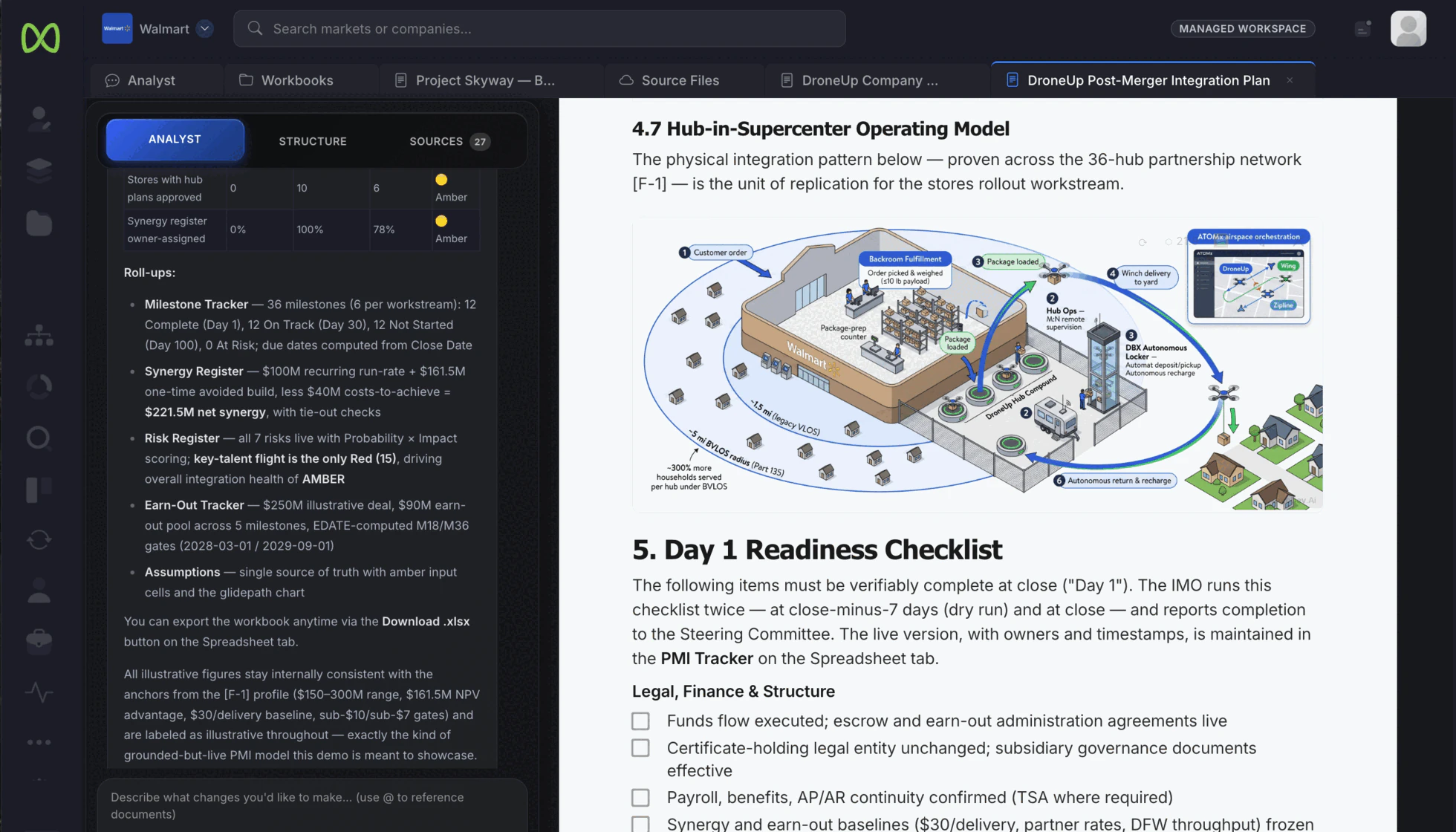
Make the target operating model tangible
Use the Analyst to develop the operating model with the team that will deliver it. Visualize the physical flows, technology, handoffs, and dependencies so the integration plan reaches beyond a list of tasks.
Keep the value case in view
Build a working reporting pack with the Analyst. Bring milestones, financial benefits, risks, and deal commitments together, then update the inputs as your workstream owners report progress.
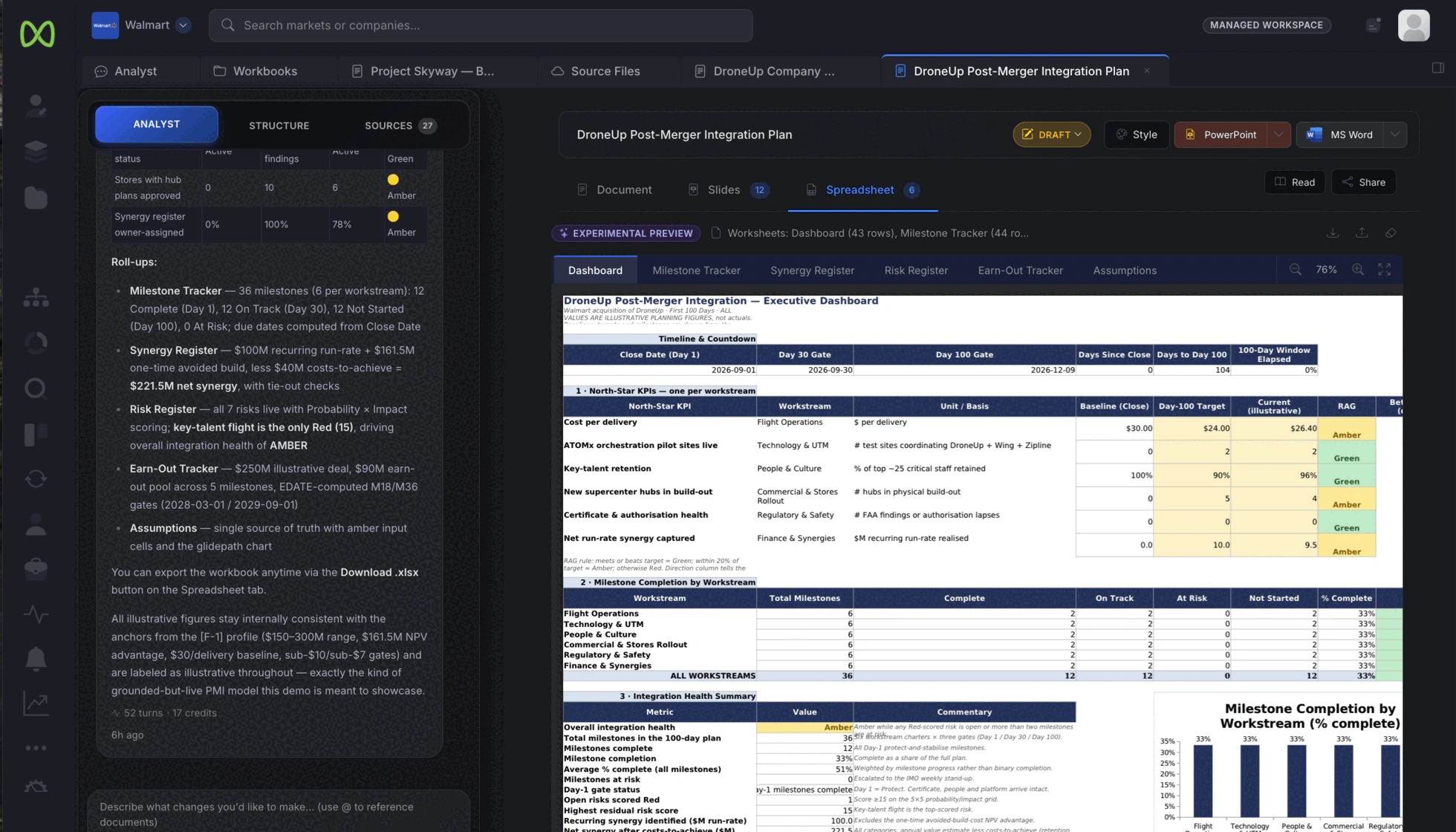
Six linked sheets in the sample
The example includes 36 milestones across six workstreams. The Analyst’s review calls attention to key-talent risk and unassigned synergy ownership, illustrating the kinds of issues the team should resolve.
Open the plan, slides, and workbook ↗Start before the handover
Your integration team can start from the company research, diligence findings, financial assumptions, and investment memorandum already in the workspace.
Give it the acquisition rationale, diligence findings, proposed close date, and operating constraints. Develop the plan, charters, governance, and measures together.
Refine responsibilities, decision rights, and dependencies with the people who will execute. Make explicit what changes, what stays independent, and where continuity is critical.
Update the tracker, investigate the gaps, and develop the next progress report and presentation. Export the workbook for Excel or share the plan and slides from CorpDev.Ai.
Take a closer look
Sample integration plan ↗The investment case behind the plan ↗Want our best minds alongside your team? Explore Managed Services.